Gas Station Concrete Deep Clean with Pressure Washing and Sandblasting
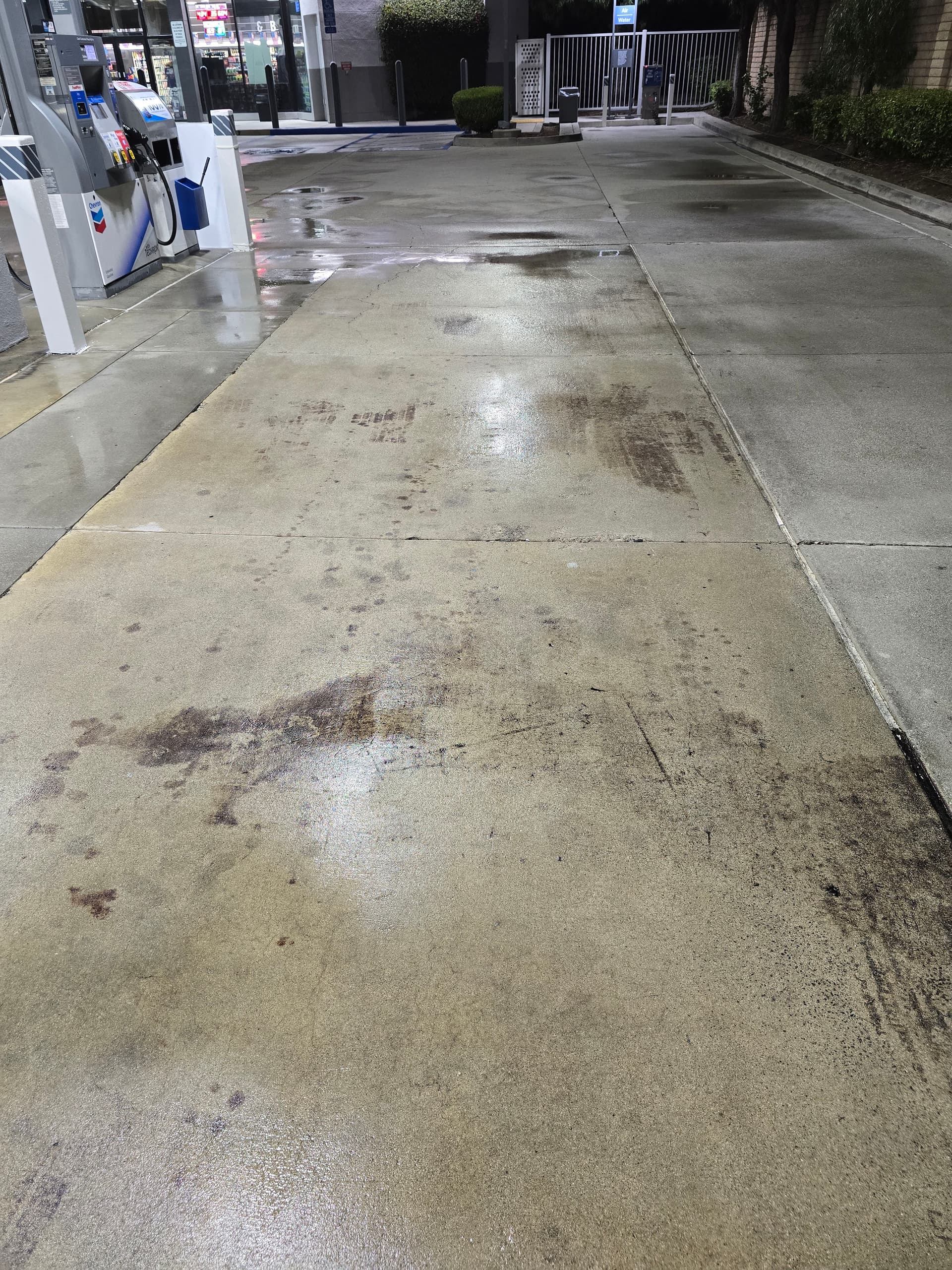
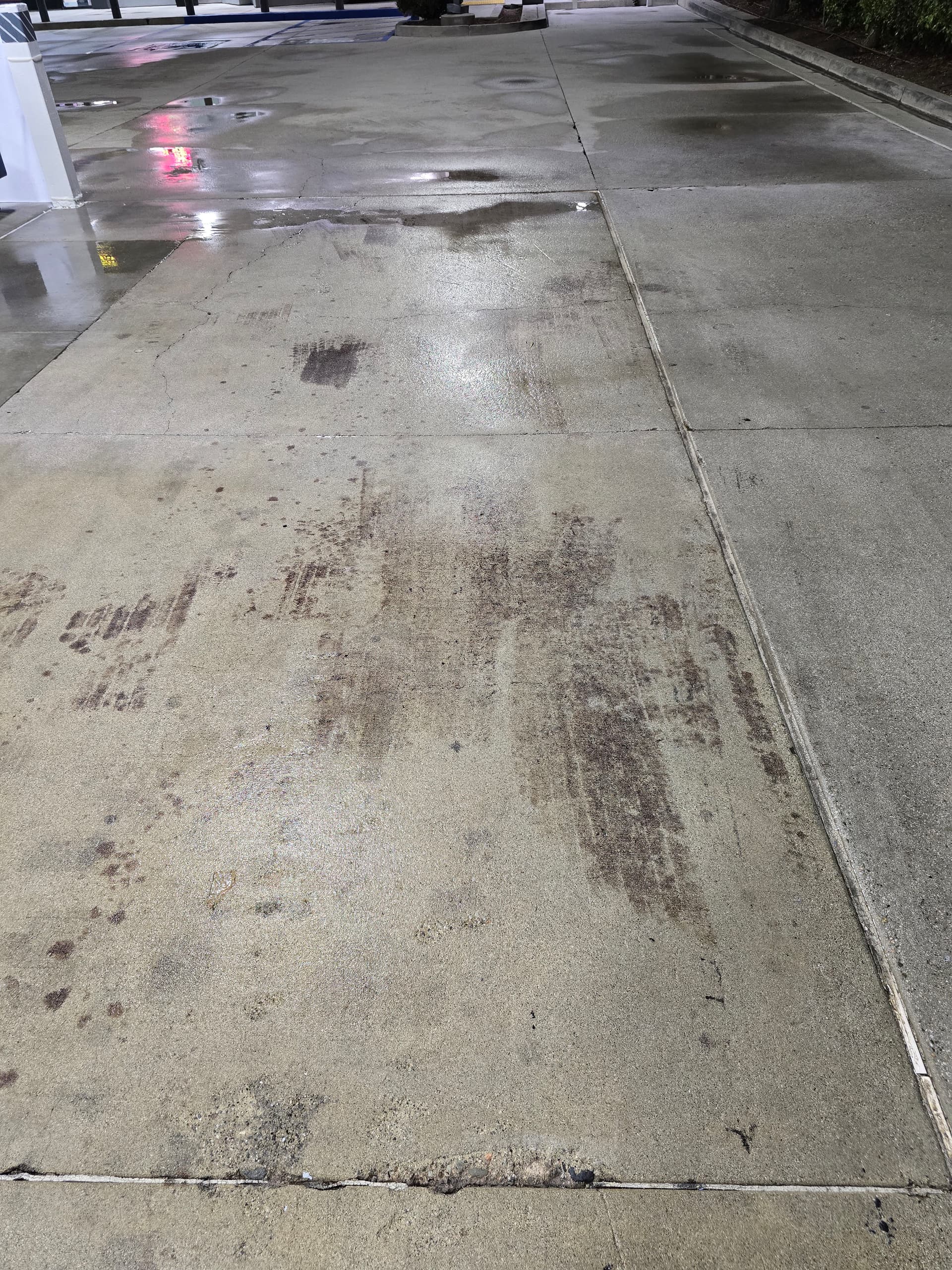
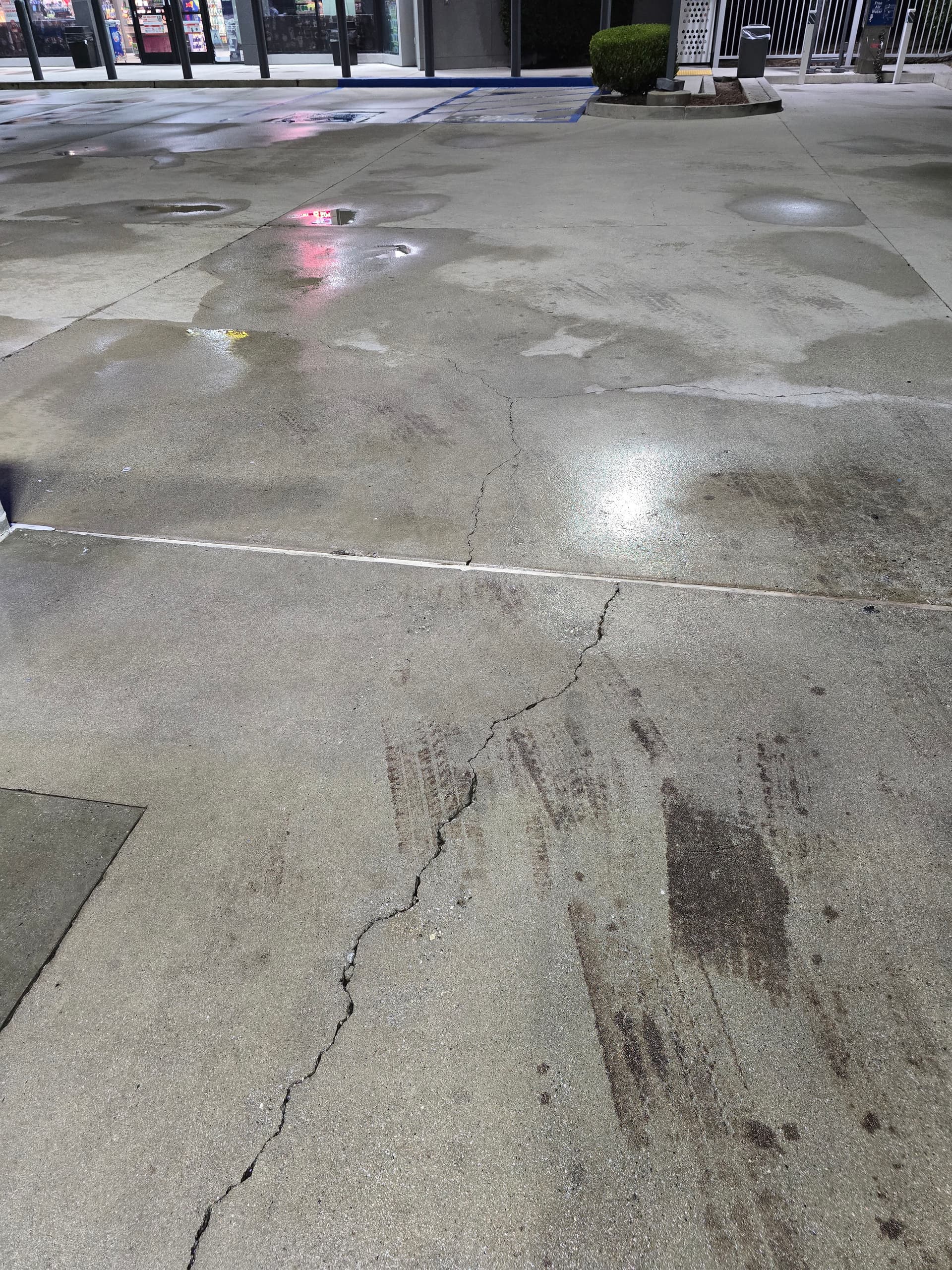
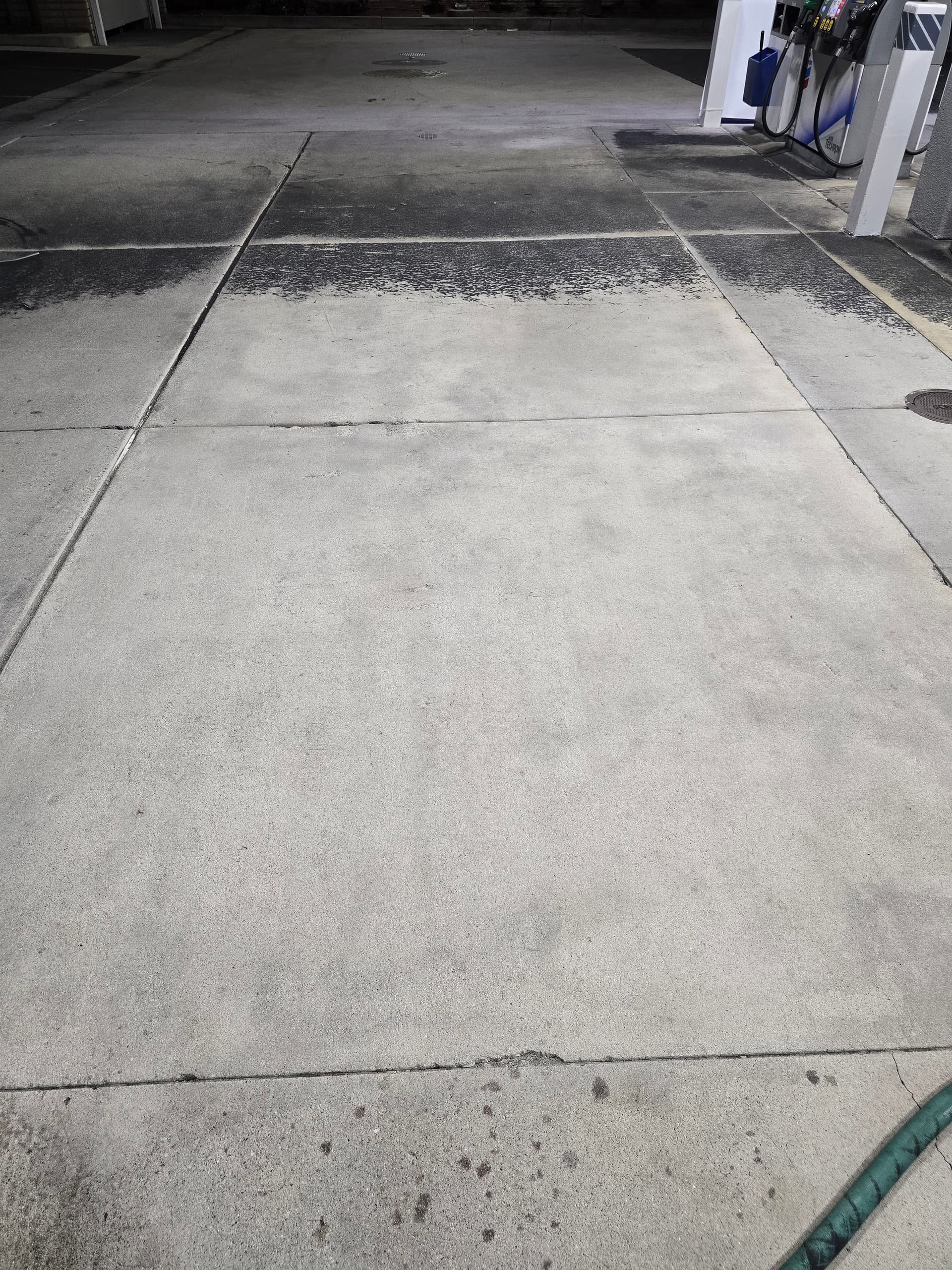
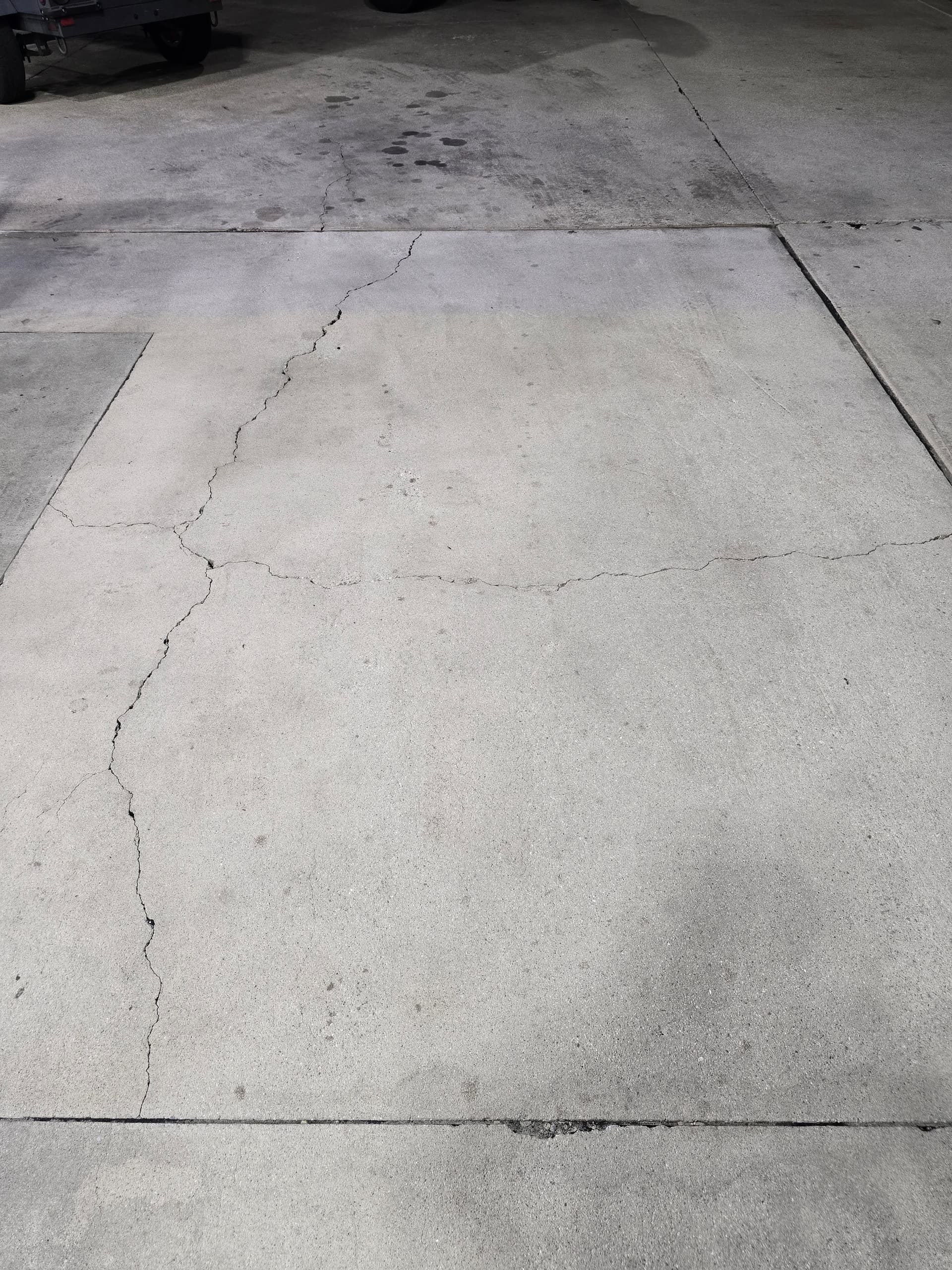
Gas station concrete takes a beating. Oil drips, tire marks, rust - it all builds up over time and gets ground deeper into the surface with every car that rolls through. Standard pressure washing handles a lot of it, but some stains just laugh at water pressure alone. That's where most cleaning crews hit a wall.
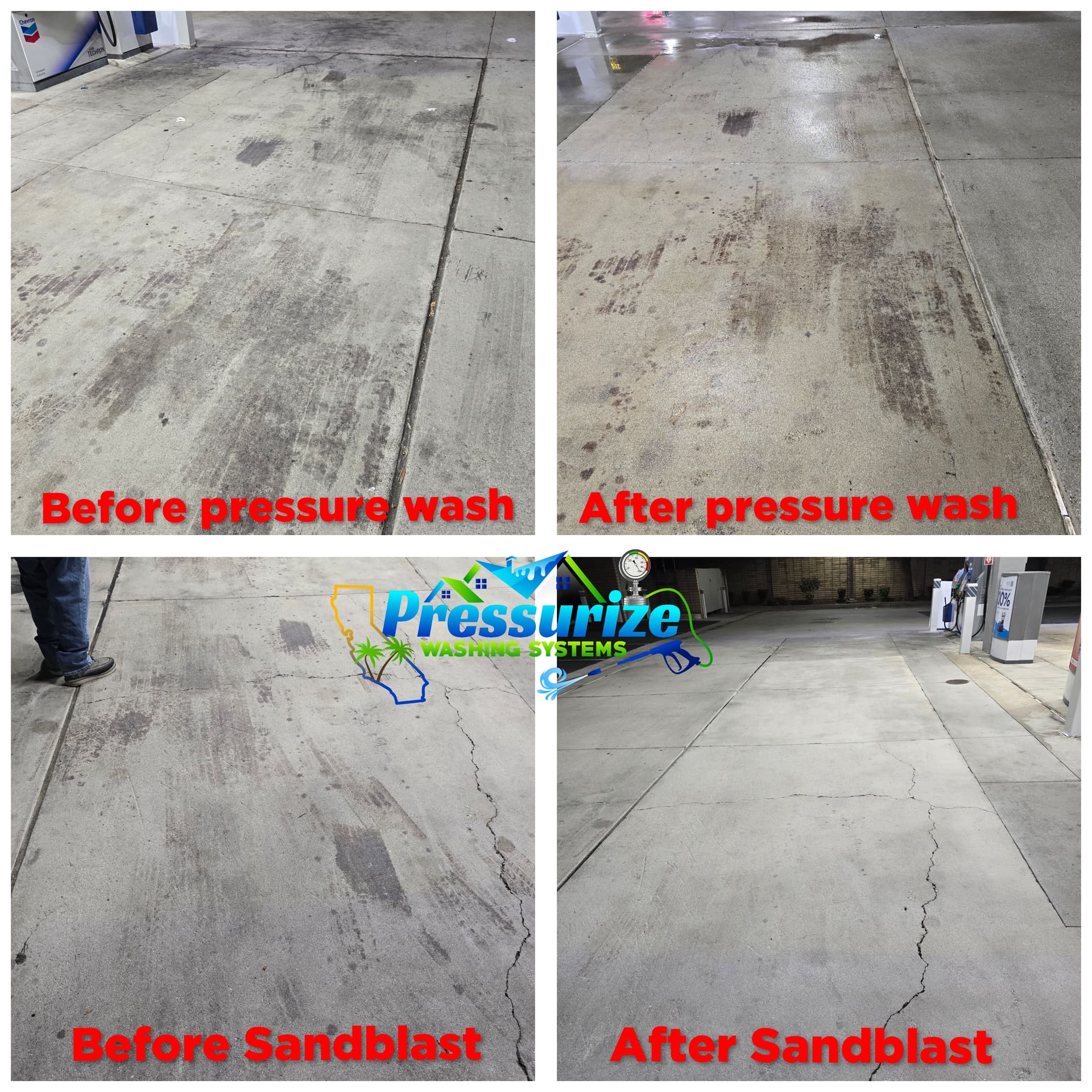
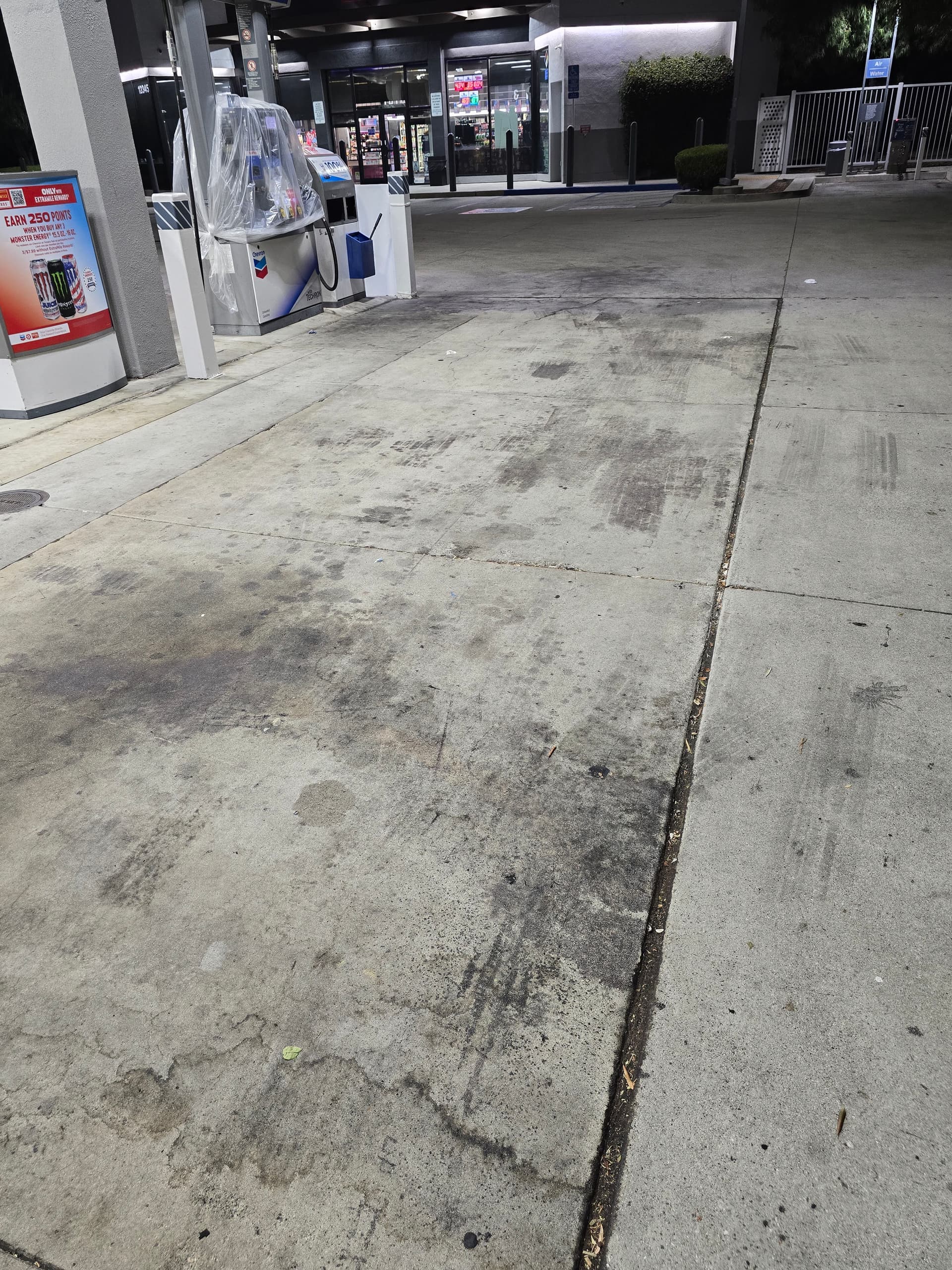
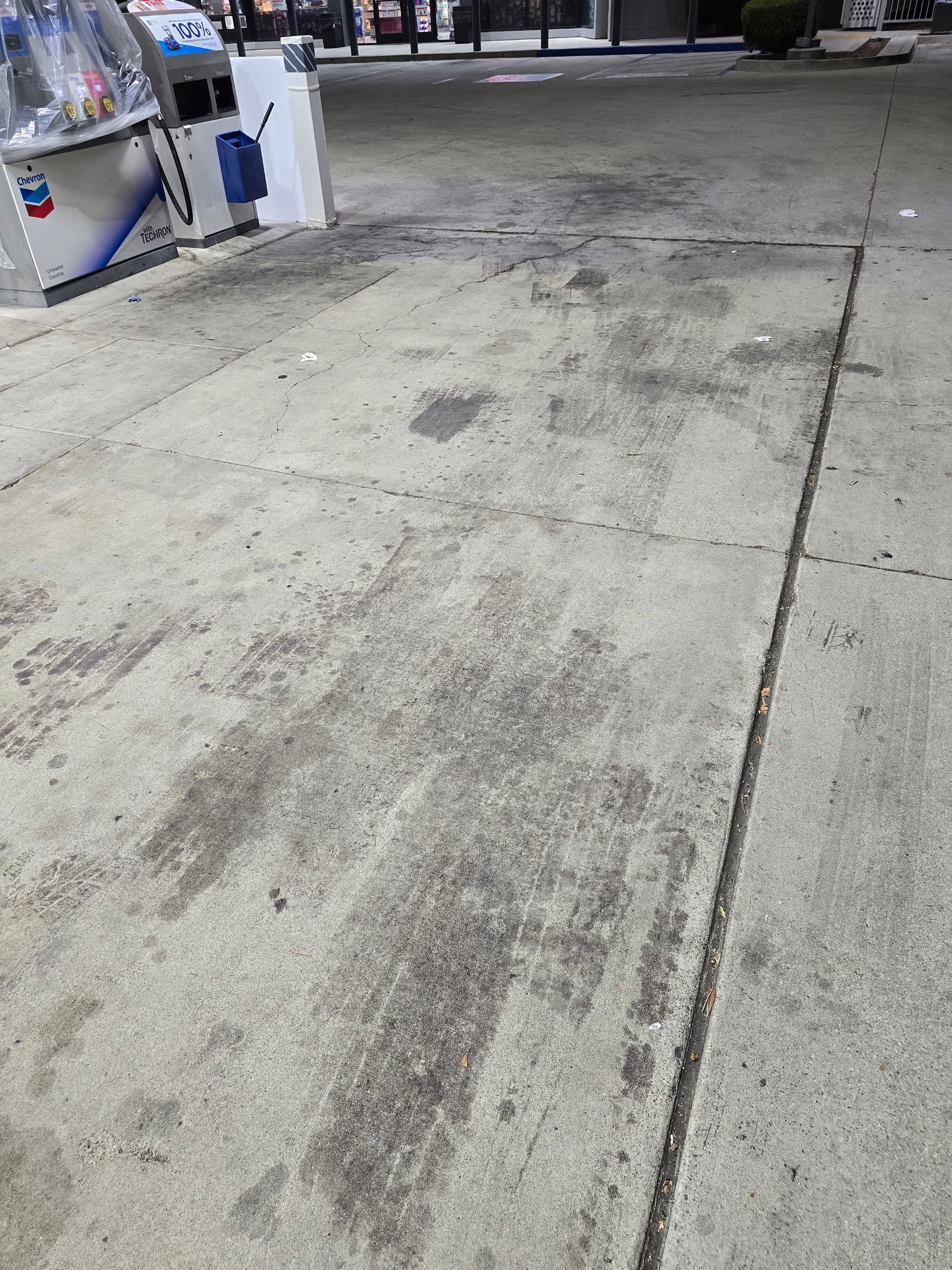
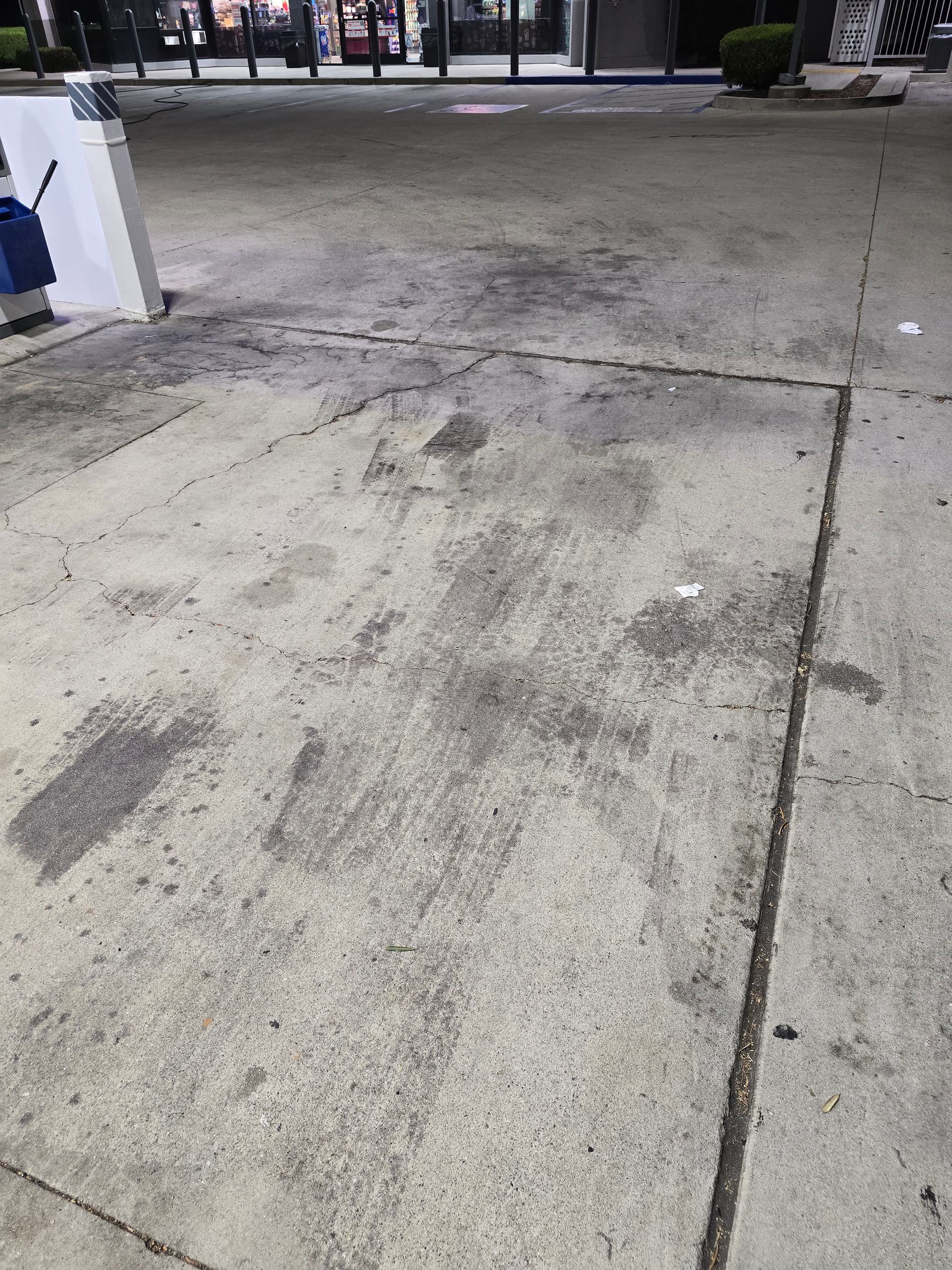
This Chevron came to us after being let down by another crew. The concrete was covered in heavy oil buildup, embedded tire marks, and rust staining that had been sitting long enough to bond with the surface. We started with a thorough deep clean using hot water pressure washing to knock out the bulk of the grime and general surface contamination. That alone made a noticeable difference.
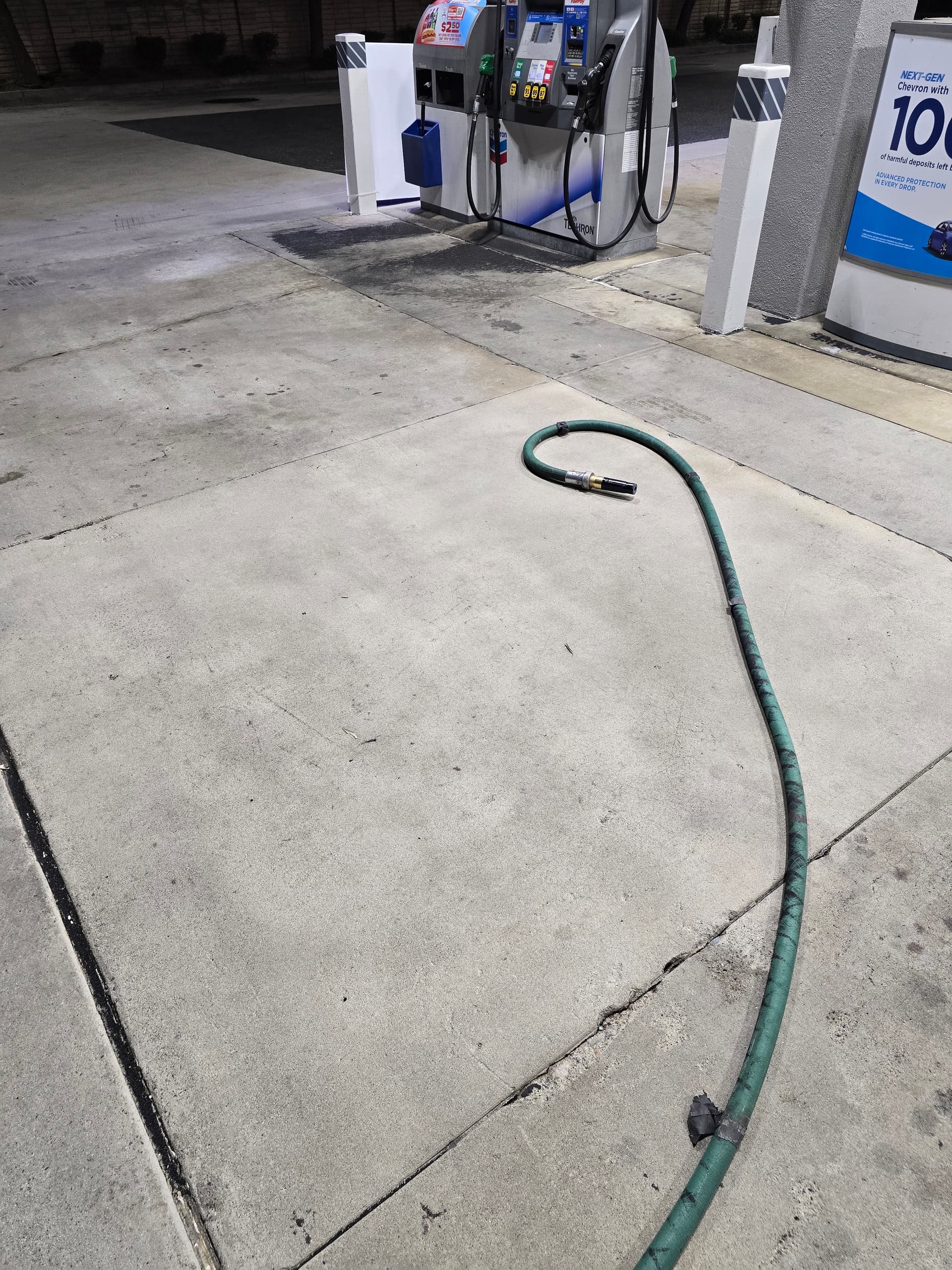
But the toughest spots - the combination of rust and tire marks that had really locked into the concrete - needed more. So we brought in the sandblaster. Sandblasting works by using abrasive media at high pressure to strip contaminants directly out of the concrete surface rather than just blasting water at them. It's the right call when standard washing isn't cutting it, and it's not something every crew has the equipment or experience to do properly.
The result is concrete that's actually clean - not just wet and slightly less dirty. Wide, open slabs with uniform color and none of the dark, streaky buildup that was there before. That's what a gas station forecourt should look like. It reflects well on the business and creates a cleaner, safer environment for customers pulling in every day.
Not every stain job is the same. Some need a simple wash. Others need a multi-step approach with the right tools for what's actually on the surface. We assess each job and bring what it takes to get real results - not just a surface-level clean that fades fast.