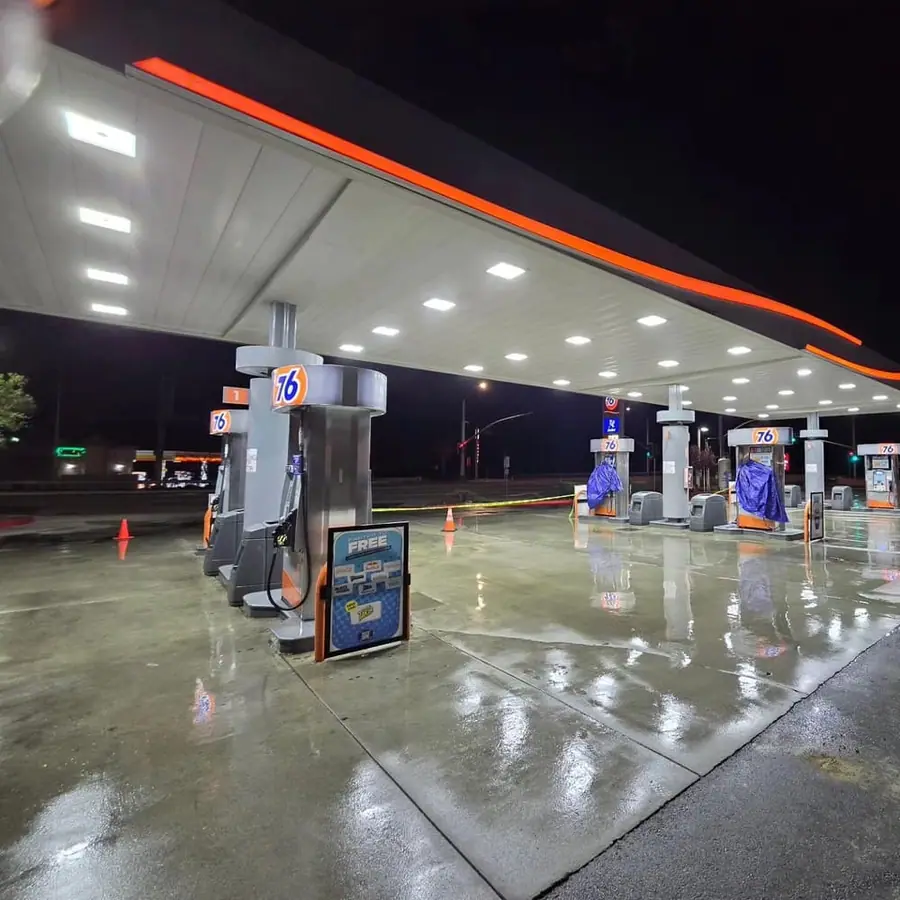
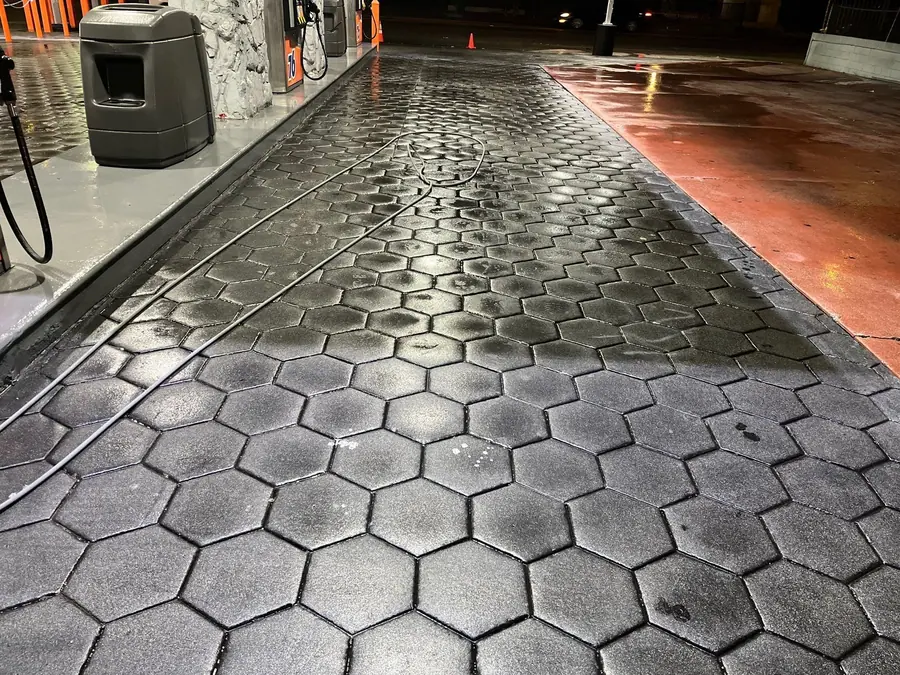
Short answer. Most gas stations should be pressure washed every 4 to 6 weeks. High-volume stations with heavy foot traffic are often washed weekly. Canopies are usually cleaned two to four times a year, and spills should be cleaned the day they happen.
A schedule by area
Different parts of a station get dirty at different speeds.
- Fuel islands and pads: every 4 to 6 weeks, weekly at high volume. This is where fuel drips and oil collect.
- Entry, sidewalks and trash areas: every 4 to 6 weeks, with gum removal each visit.
- Parking stalls and drive lanes: every 6 to 12 weeks.
- Canopy, columns and lights: two to four times a year, more often if birds roost there.
- Dumpster enclosure: monthly.
- Spills: the same day.
What changes the schedule
Volume is the biggest factor. A station by a freeway ramp sees several times the traffic of a neighborhood site. Diesel islands and truck traffic stain faster than passenger lanes. Coastal stations fight salt and damp; inland stations fight heat that bakes oil in.
Brand standards matter too. Fuel brands inspect for cleanliness, and mystery shopper visits come without warning. A fixed route means the site is never far from its last clean.
Why not just wait until it looks bad?
By the time concrete looks bad, the oil has soaked in and needs far more work to remove. Regular washing costs less per visit and avoids the restoration job, and clean concrete is less slippery, which matters for liability.
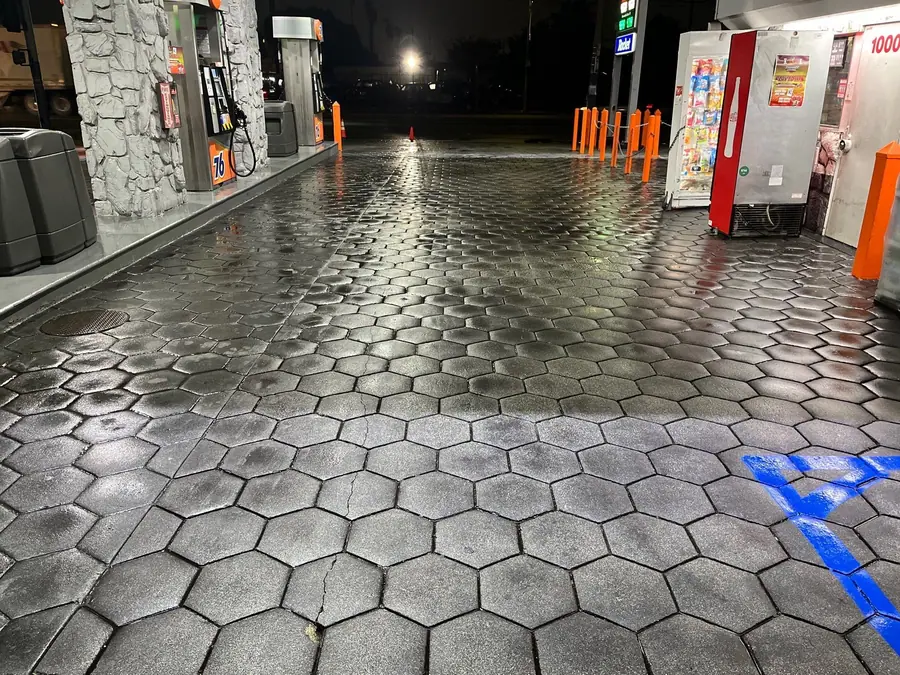
How we schedule stations
We maintain more than 200 gas stations across California. Almost all are on a recurring overnight route, one island closed at a time, with wash water recovered. New customers can see a free test patch cleaned before choosing a frequency.