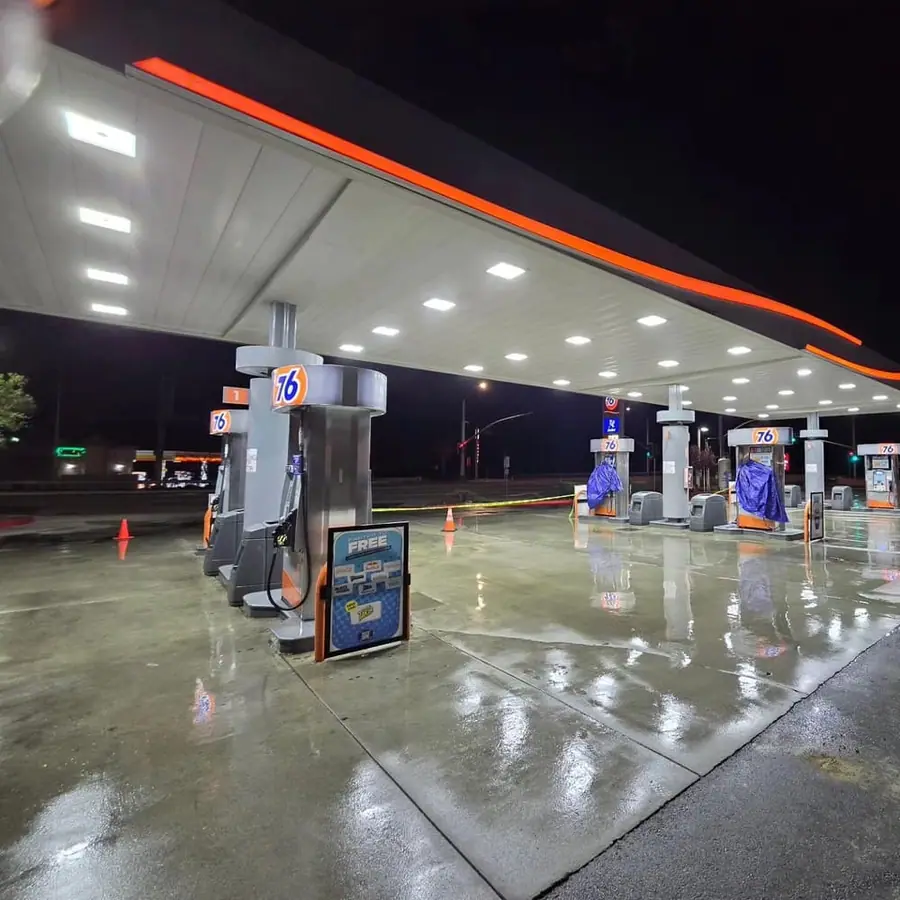
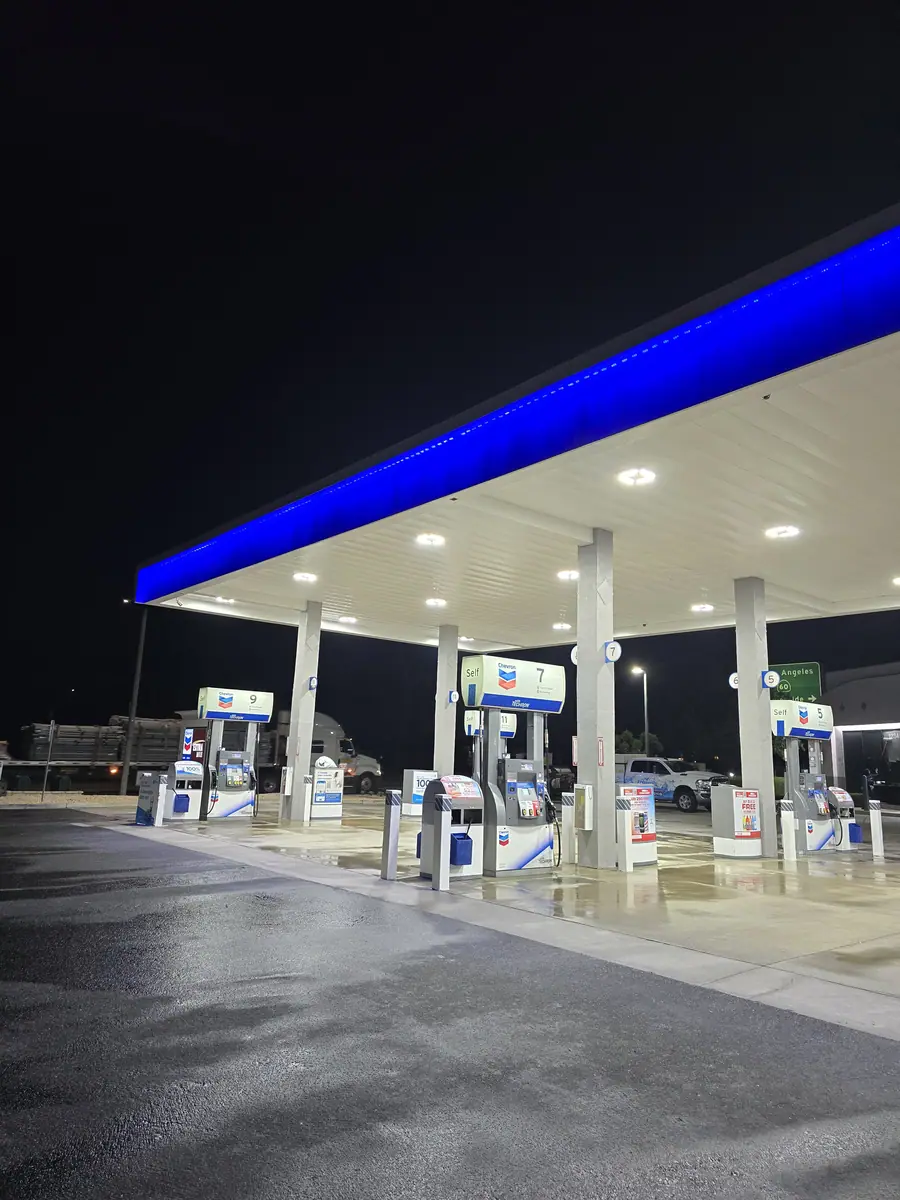
Short answer. Power washing and pressure washing both use high-pressure water. Power washing heats the water; pressure washing does not. Heat is what breaks down oil, grease and chewing gum, so power washing is the better choice for most commercial concrete.
The short version
People use the two terms for the same thing, and for a dusty patio the difference hardly matters. On a gas station forecourt or a restaurant drive-thru it matters a lot.
- Pressure washing: unheated water at high pressure. Good for dirt, dust, mud and loose paint.
- Power washing: heated water at high pressure. Needed for oil, grease, gum and anything sticky.
- Soft washing: low pressure with detergent. Used on stucco, roofs, wood and painted surfaces that pressure would damage.
Why heat changes the result
Think about washing a greasy pan in cold water. Pressure alone smears grease around. Heat softens it so detergent and water can carry it away.
Concrete works the same way. Hot water lifts oil out of the pores, melts gum so it releases without leaving a ring, and cuts drying time so a site can reopen sooner.
Which one does your property need?
A rough guide by property type.
- Gas stations, drive-thrus, dumpster pads, loading docks: power washing with degreaser.
- Storefront sidewalks with gum: power washing.
- Parking lots: power washing on the stained stalls, either method on the rest.
- Stucco, painted walls, awnings, tile roofs: soft washing.
- New concrete after construction: lower pressure and the right cleaner for cement residue.
What to ask a contractor
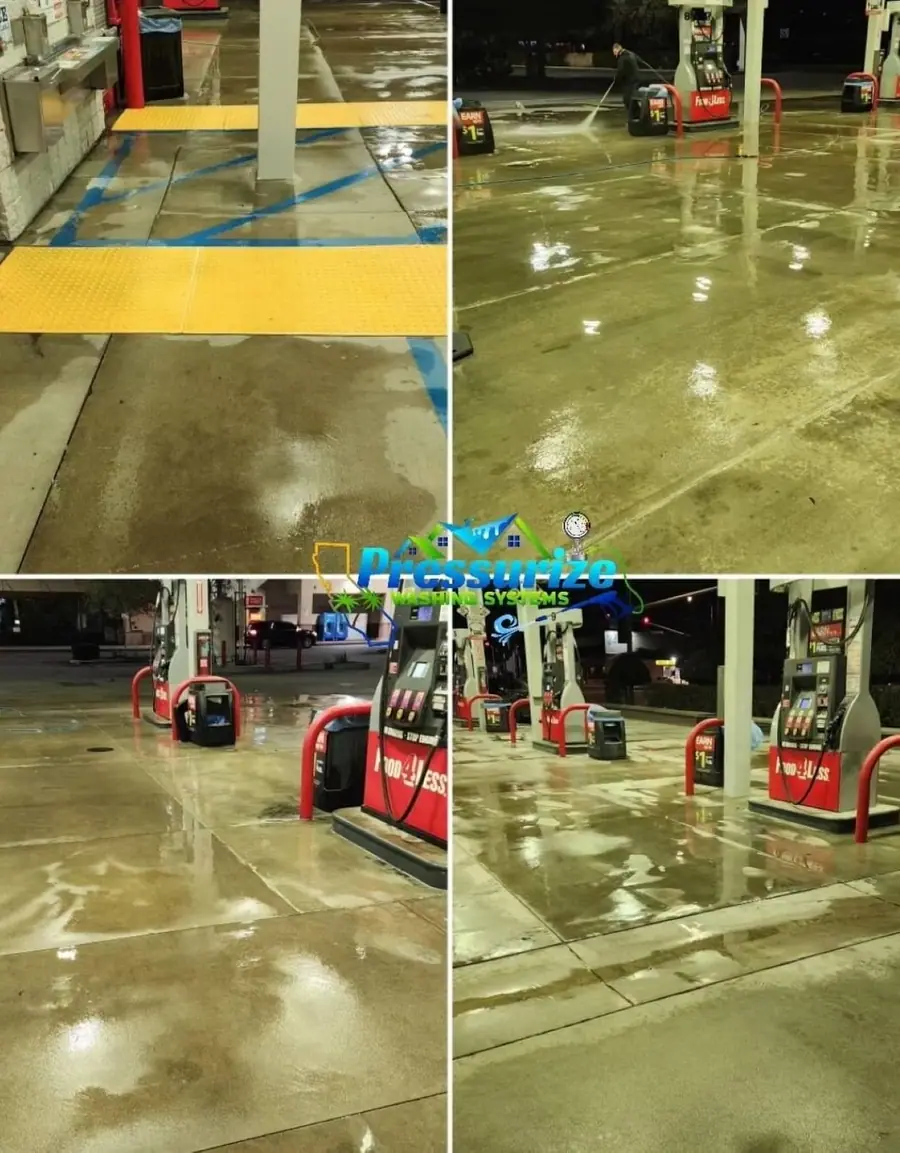
Ask whether they run hot water units, whether they use flat surface cleaners or only a wand, and what happens to the wash water. The answers tell you whether you are getting a rinse or a clean.